Speech Latency in AI Calls: Why Every Second Counts
July 17, 2026 • Fluent • 5 min
Ever spoken to a voice assistant and noticed a small, awkward lag before it replied? The lag has a name: speech latency. Speech latency in AI calls is simply the time delay between a person finishing their sentence and the AI starting to respond.
The time gap may be short, but it can mean everything to an interaction.
In this post, we’ll discuss what speech latency means for AI calls, why it is a factor, and what can cause it, as well as what companies can do to reduce speech latency in their calls. We will cover what thefluent.io and platforms can do to empower businesses to create faster and human-like conversations.
What Is Speech Latency in AI Calls?
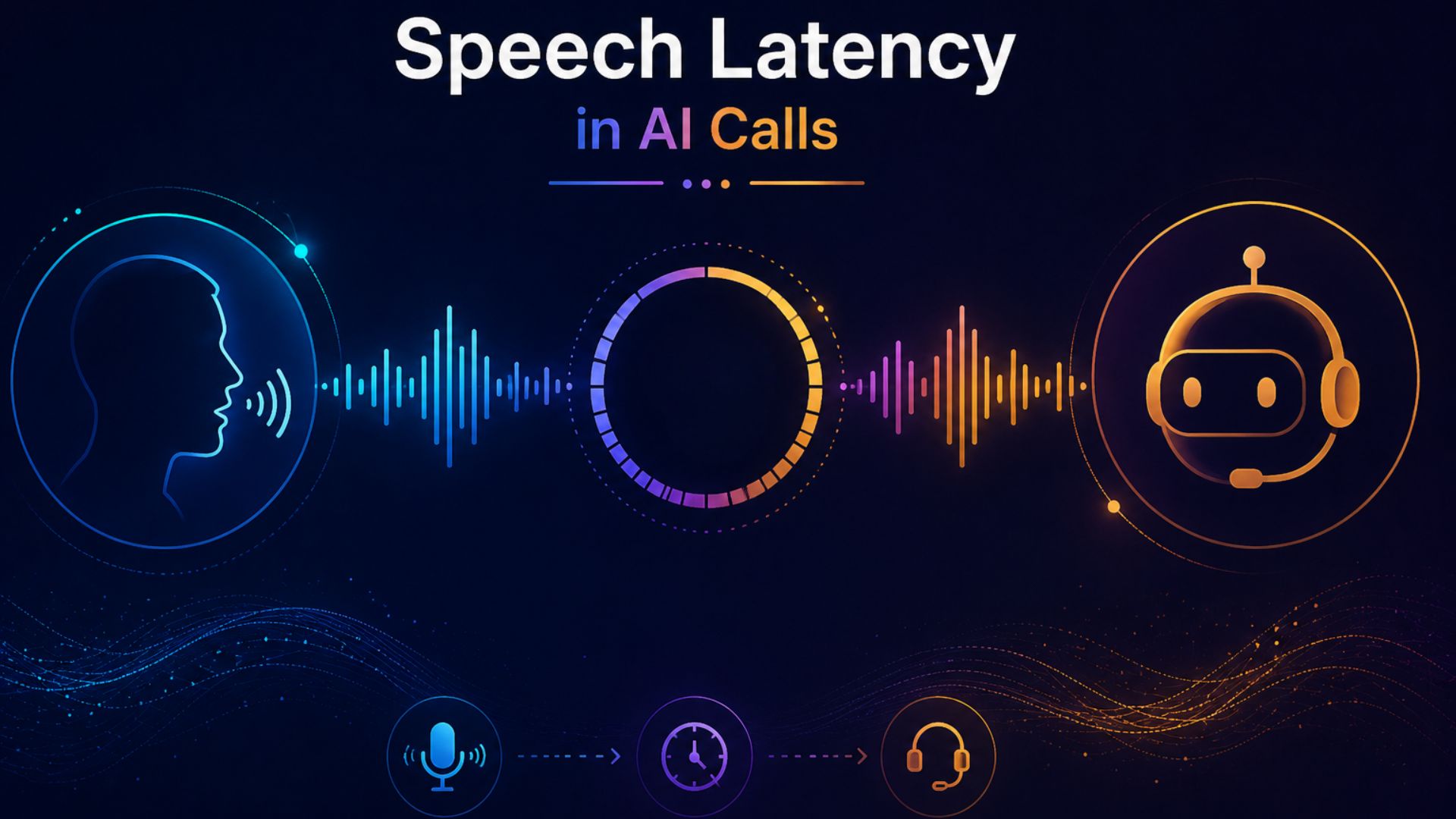
Speech latency in AI calls refers to the delay between a user's spoken input and the AI system's spoken output. It includes the time taken to:
- Capture and process the voice input
- Convert speech to text
- Generate a suitable response
- Convert that response back into speech
- Deliver the audio to the listener
If any of these steps take too long, the whole conversation feels slow and unnatural. This is why speech latency in AI calls is one of the most watched metrics in the voice technology industry today.
Why Does Speech Latency Matter So Much?
Humans are used to natural conversations. In a normal chat between two people, replies come within a few hundred milliseconds. If an AI system takes two or three seconds to respond, the delay feels awkward. Callers may think the system has frozen or stopped working.
High speech latency in AI calls can lead to:
- Frustrated customers who hang up early
- Lower trust in AI-powered support systems
- Poor customer satisfaction scores
- Higher call abandonment rates
- A weaker brand image for businesses using the technology
On the other hand, low speech latency in AI calls creates a smooth, human-like experience. Customers feel heard and understood, which builds trust in the brand.
Common Causes of Speech Latency in AI Calls
Several factors can slow down an AI voice system. Some of the most common causes are listed below.
| Cause of Delay | Simple Explanation |
| Network Issues | Slow or unstable internet connections delay audio transfer |
| Speech-to-Text Conversion | Poor quality transcription engines take longer to process words |
| Server Processing Time | Overloaded servers cannot generate responses quickly |
| Text-to-Speech Generation | Low-quality voice engines add extra delay while creating audio |
| Complex AI Models | Very large models sometimes take more time to "think" before replying |
| Poor System Design | Systems that are not built for real-time use often show more lag |
Understanding these causes is the first step toward fixing them. Businesses that want smooth voice experiences must test each part of the pipeline carefully.
How to Reduce Speech Latency in AI Calls?
Reducing speech latency in AI calls requires the right technology and the right approach. Here are some proven methods:
- Use faster speech recognition tools that convert voice to text in real time
- Choose lightweight AI models that balance speed and accuracy
- Optimize server locations so data travels shorter distances
- Stream responses instead of waiting for the full reply to be ready
- Test regularly under real-world conditions, not just in ideal settings
This is exactly where a platform like thefluent.io becomes valuable. Thefluent.io is designed to help businesses build voice AI systems that respond quickly and naturally. By focusing on low speech latency in AI calls, thefluent.io helps companies create voice experiences that feel almost human.
The Business Impact of Low Speech Latency
When companies reduce speech latency in AI calls, the benefits go beyond just a better user experience. Faster response times can directly improve business outcomes. Customers are more likely to complete a purchase, resolve an issue, or stay on a call when the AI responds quickly.
Some direct benefits include:
- Higher customer satisfaction
- Better first-call resolution rates
- Increased trust in automated systems
- Improved brand reputation
- Higher efficiency in call centres
For industries like banking, healthcare, and e-commerce, where quick support matters most, low speech latency in AI calls is not just a nice feature. It is a business necessity.
Why Choose Thefluent.io?
Not every voice AI provider treats speech latency in AI calls as a top priority. Some platforms focus only on features, without paying attention to real-time performance. Thefluent.io takes a different approach. It combines strong AI models with optimized infrastructure to keep response times short and natural.
Businesses that use thefluent.io can expect:
- Faster voice response times
- Smoother customer conversations
- Reliable performance even during peak call volumes
- A voice AI system that feels closer to human interaction
If you are looking to build or upgrade your voice AI system, reducing speech latency in AI calls should be your top priority. Platforms like thefluent.io make this possible by combining speed, accuracy and reliability in one solution.
Final Thoughts
In order to offer seamless and speedy voice experiences with AI, developers must pay attention to speech latency. With long delays,speech latency in AI callscan even result in trust degradation. In such a scenario, by minimizing delays through effective technology choices, organizations will build reliable, rapid, human-like experiences for the clients.
In a world that increasingly leans on AI for verbal conversations, solutions such as thefluent.io will play a crucial part to enable organizations in scaling ahead.
Reducing latency in calls made by AI isn’t just about technology; it is about fostering better, quicker, and far more conversational engagements with every call that happens.