Conversational AI Voice Agents vs Chatbots: Which Drives Better Engagement?
February 25, 2026 • Nilesh • 5 min
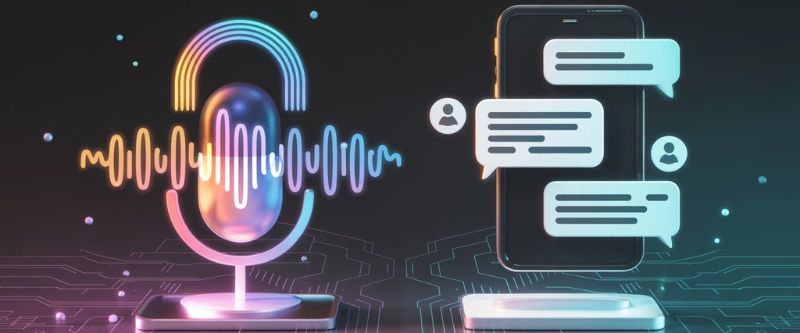
In the ever-evolving landscape of digital interaction, businesses are constantly seeking smarter, more intuitive ways to connect with users. Two technologies have emerged as frontrunners in this quest:Conversational AI voice agentsand traditional chatbots. Both tools aim to streamline communication, provide support, and improve user experience, but when it comes to engagement, one often outperforms the other. This blog explores the nuanced differences between these technologies—especially AI voice bot vs chatbot—and reveals which approach can truly drive meaningful engagement.
Understanding the Basics
Before diving into engagement metrics and behavioral psychology, it’s important to clarify what we mean by these technologies.
What Is a Conversational AI Voice Agent?
A Conversational AI voice agent is an advanced software system that interacts with users through spoken language. Rather than typing, people can talk naturally to these systems, much like they would with another person. Behind the scenes, these voice agents use automatic speech recognition (ASR) to understand human speech, and natural language processing (NLP) to interpret intent and respond intelligently.
Voice agents are widely used in virtual assistants like Siri, Alexa, or Google Assistant, but they also play critical roles in customer service, healthcare, finance, and other sectors where hands-free communication can be an advantage.
What Is a Chatbot?
Chatbots are computer programs designed to mimic conversation through text or graphical interfaces. They can be rule-based (following scripted paths) or AI-driven, using NLP to understand and respond to user queries. Chatbots are integrated into websites, apps, social media platforms, and messaging services.
While both technologies aim to facilitate communication, their interaction dynamics differ significantly—especially when comparing AI voice bot vs chatbot.
Engagement: Why It Matters
Engagement isn’t just about interaction frequency. In customer experience contexts, engagement translates into satisfaction, loyalty, conversion rates, and long-term value for the brand. High engagement means users find the interface intuitive, human-like, responsive, and relevant.
So when evaluating AI voice engagement software against text-based chatbots, the question becomes: which mode keeps users more connected, understood, and invested?
The Human Advantage: Conversational AI Voice Agents
Humans speak far more naturally than they type. Spoken communication has been our primary mode of interaction since infancy, making voice agents inherently more intuitive than text-centric interfaces for many tasks.
1. Natural Interaction
Voice agents allow users to communicate in the same way they speak—complete with tone, inflection, and context. This results in more fluid, spontaneous conversations. When users feel understood quickly and easily, they’re more likely to remain engaged.
2. Accessibility and Convenience
There’s no typing required with voice agents. This becomes hugely beneficial in settings where hands-free communication matters—such as driving, cooking, or multitasking at work. This contextual ease enhances user satisfaction and overall engagement.
3. Emotional Cues and Tone Recognition
Emerging natural language voice AI agent technologies not only process words, but can analyze tone and mood. This allows voice systems to respond empathetically or change conversational style based on emotional cues, making interactions feel more personal and engaging.
4. Faster Resolution Cycles
When users speak, they provide more information in less time. That depth helps voice agents quickly capture intent and deliver accurate responses—reducing frustration and improving overall engagement effectiveness.
What About Chatbots?
Despite the advantages of voice systems, chatbots are still widely used—and for good reason. They excel in environments where visual context, structured workflows, or detailed data exchange is needed.
1. Visual Interaction Is Powerful
Chatbots can present text, images, buttons, forms, and links—making them perfect for tasks like navigation, ticket ordering, and guided troubleshooting steps.
2. Ubiquitous and Integratable
Chatbots are easy to deploy across digital platforms, from apps to social channels to web pages. Their asynchronous nature allows users to interact at their own pace—no speaking required.
3. User Preference and Culture
Not every user enjoys voice interaction. In public or professional environments, speaking aloud may feel intrusive or uncomfortable. Chatbots provide privacy and control, which can enhance engagement for certain audiences.
AI Voice Bot vs Chatbot: Who Wins in Engagement?
The answer isn’t universally one over the other. Engagement depends greatly on context, audience, and use-case. However, there are clear patterns worth noting:
Engagement Through Emotional Fluidity
Conversational AI voice agents often win when emotional connection and natural dialogue are priorities. Users tend to stay engaged longer in spoken exchanges because they feel more human and less transactional.
Efficiency and Satisfaction
Voice agents often lead to faster issue resolution since users speak naturally and provide more complex queries in a single utterance. This speeds up understanding and response—boosting satisfaction and engagement.
Task Complexity and Context
For tasks that involve visuals, selections, or detailed steps, chatbots may hold an engagement edge because they can show content rather than describe it. A voice agent, without a screen, might struggle to guide users through highly detailed processes.
Where Combined Approaches Shine
Smart brands are no longer choosing strictly between one or the other. Instead, the most engaging experiences often blend voice and chat.
For example:
- A healthcare app might offer a natural language voice AI agent for quick symptom checks, then switch to a chatbot interface to schedule appointments or share detailed instructions.
- E-commerce platforms might use a voice agent for product searches and a chatbot for checkout steps.
- Customer service portals could offer voice input for general queries and text chat for complex support flows.
This hybrid approach enhances engagement by giving users choice and context-appropriate interaction modes.
Measuring Engagement: Voice vs Chat
Businesses must track meaningful metrics to evaluate performance, such as:
- Session length and return visits
- First-contact resolution rates
- User satisfaction scores
- Conversion rates and task completion
- Sentiment analysis
Across these measures, conversational AI voice agents often outperform chatbots in natural engagement, while chatbots excel in structured, transactional environments.
Final Verdict
So, AI voice bot vs chatbot—which drives better engagement? The most accurate answer is: it depends on the context of use and user preference. But there’s no denying the rising power of voice. Conversational AI voice agents are pushing engagement boundaries by enabling more natural, intuitive, and emotionally intelligent interactions.
Chatbots remain invaluable tools—especially where visual context, precision, and privacy are essential. But if your goal is authentic interaction that feels human, voice AI often takes the lead.
Conclusion
Engagement is no longer defined by simple interactions, but by how meaningful those interactions feel. Intelligent, adaptive, and emotionally responsive systems are reshaping expectations. Today’s users don’t just want answers—they want conversations that understand them.
Whether you’re choosing a natural language voice AI agent, a chatbot, or a blended solution, the key is to align technology with user behavior, task complexity, and context. When done right, engagement isn’t just a metric—it’s a relationship.